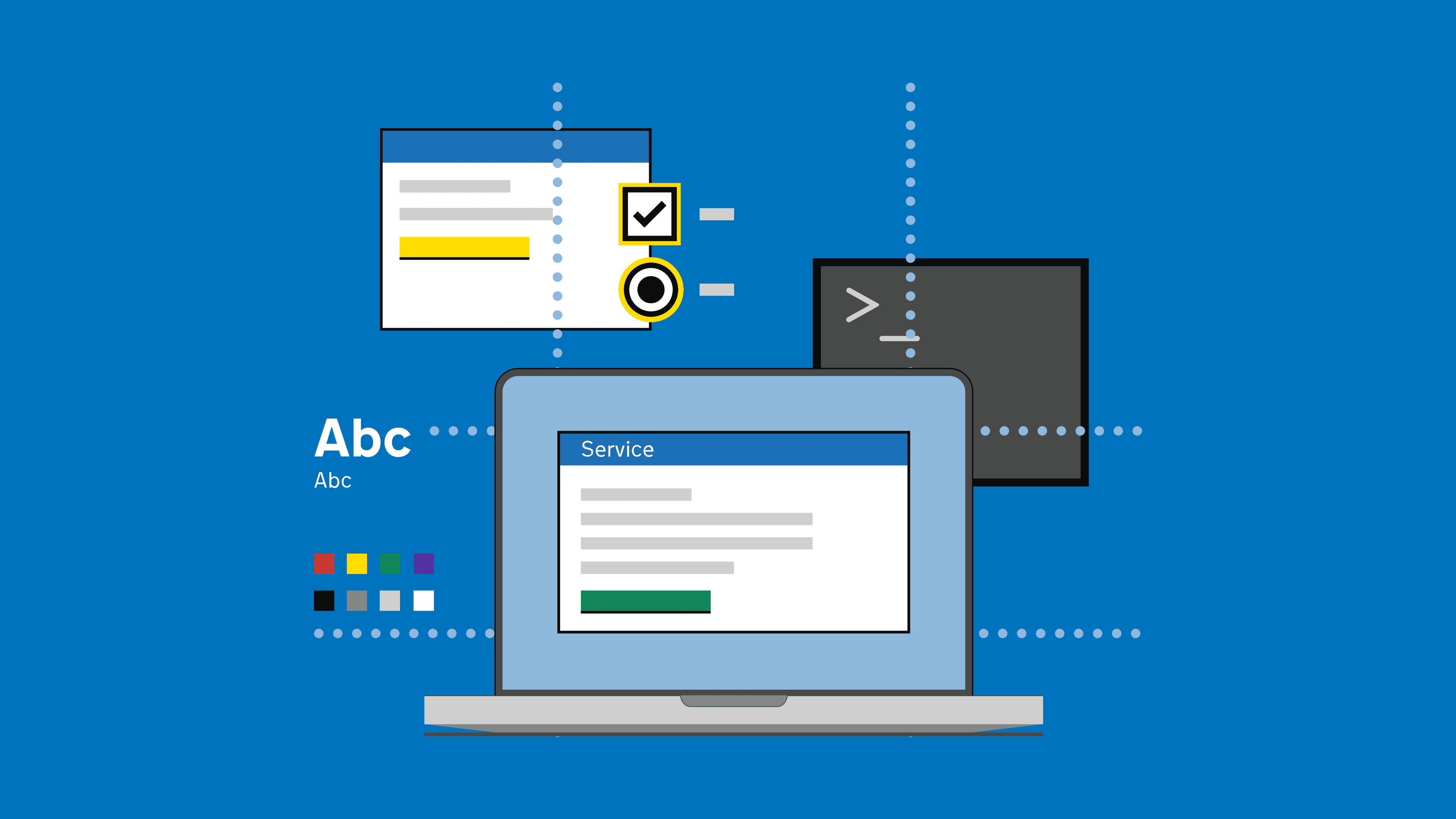
Illustration by design-system.service.gov.uk
Public services must work for everyone, regardless of ability, context, or circumstance. This is not only a legal requirement—under the Public Sector Bodies Accessibility Regulations 2018—but a moral and societal responsibility.
For leaders in public services, charities, and non-profits, accessibility directly impacts:
Service reach: Ensuring no one is excluded from essential support.
Operational efficiency: Fewer support requests and reduced "failure demand."
Public trust: Demonstrating fairness, dignity, and inclusion.
Risk reduction: Avoiding legal and reputational exposure.
Accessibility is, fundamentally, good service design.
What is WCAG 2.2 AA (in Plain English)?
WCAG stands for Web Content Accessibility Guidelines, an internationally recognised framework managed by the W3C Web Accessibility Initiative (WAI). It ensures digital products are usable by people with disabilities.
At the AA level (the standard for UK public sector bodies), your service must meet four core principles, often referred to as POUR:
Perceivable: Users can see or hear content (e.g., alt text for images).
Operable: Users can navigate via keyboard and avoid "time-based traps."
Understandable: Content uses clear language and predictable flows.
Robust: The service works across browsers and assistive technologies like screen readers.
This framework aligns perfectly with our philosophy of strategic clarity and service-first design.
Our Approach: Accessibility as a Foundation, Not a Fix
We do not treat accessibility as a compliance task at the end of delivery. Instead, we integrate it from the initial discovery and strategy phases.
Our approach is guided by three principles:
1. Strategic Clarity
We simplify complexity so services are easy to navigate. By reducing cognitive load and using plain language, we ensure users are confident in knowing what to do next. Learn more about our Service Design approach. (Note: Link to your services page).
2. Serving with Care
Accessibility is an expression of respect. We design by listening with empathy to real people, prioritizing usefulness over decoration, and considering the needs of underserved communities.
3. Growth Mindset
Accessibility evolves. We continuously improve through user feedback and adapt to new technologies, treating every challenge as an opportunity to raise the bar for inclusive design practices. (Note: Link to your blog index).
How We Deliver WCAG Compliance
Here is our structured process for ensuring accessibility across public sector projects:
Step 1: Understand & Assess
We start by building a clear picture of your current state.
Review services against WCAG 2.2 AA standards.
Identify accessibility and usability gaps.
Assess legal and operational risks.
Step 2: Define & Design with Clarity
We create strong, accessible foundations from the outset, using inclusive UX/UI patterns and human-centered design principles.
Step 3: Build & Validate Accessibly
We ensure accessibility is carried through into delivery by testing with assistive technologies and real users. A product must be genuinely usable, not just compliant on paper.
Step 4: Improve & Evolve Continuously
Accessibility doesn’t stop at launch. We monitor real-world usage and support long-term accessibility governance to ensure the service remains resilient.
Common Accessibility Challenges (and How We Solve Them)
"Our service is too complex to simplify."
We break complexity into clear, structured journeys.
"Accessibility will limit design creativity."
Constraint leads to clarity. We follow the GOV.UK Design System to ensure high-quality, accessible aesthetics.
"We’ll fix accessibility later."
Retrofitting is costly. We save you budget by designing it in from the start.
The Business Case for Accessibility
For leaders and decision-makers, accessibility is a strategic advantage. It leads to improved service efficiency, wider audience reach, and stronger public trust. It is the foundation of good digital governance.
Accessibility as a Form of Service
At its core, accessibility is about serving people with care. This is critical in public services, where users may already be in high-stress situations. When we prioritize clarity and empathy, we create services that truly work for people.
Ready to Improve Your Service?
If you're looking for a practical starting point to improve your service’s accessibility, we can help.
Book a free 30-minute conversa
tion with Suraj at Studio Soren to explore where you are today and how to move forward with confidence.